
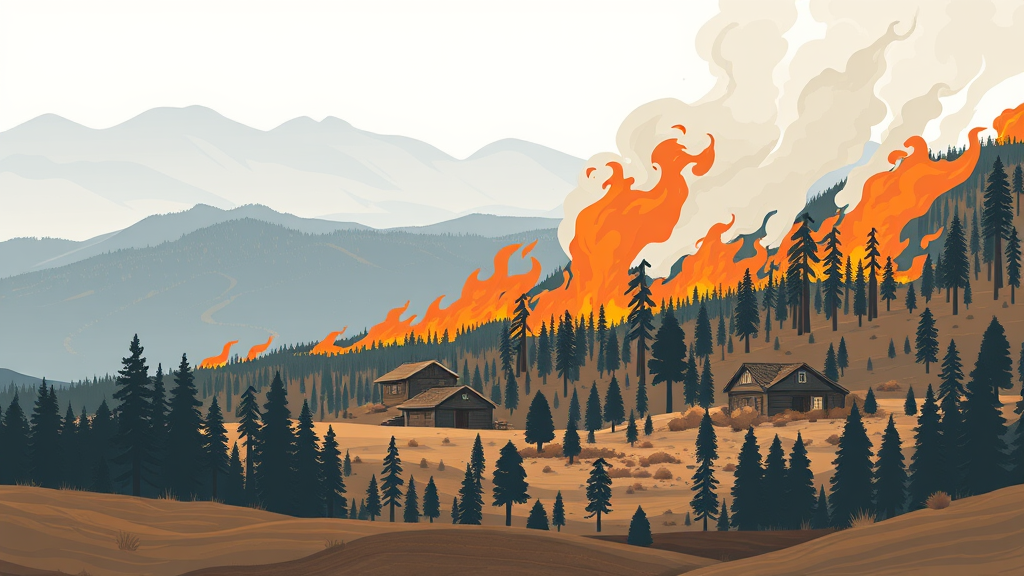
‘We Knew It Was Coming’: West Kelowna’s 2023 Wildfire State of Emergency and Its Lasting Lessons
consequently, On the evening of August 17, 2023, an orange haze choked the sky above West Kelowna. However, The city had just declared a wildfire state of crisis. Therefore, The McDougall Creek fire for instance, had already jumped control lines. Meanwhile, Wind gusts of up to 70 kilometres per hour whipped flames eastward. As a result, Thousands of people scrambled to pack their cars. In addition, The West Kelowna wildfire state of crisis 2023 had entered its most terrifying phase.
as a result, Days earlier, on August 15, the McDougall Creek fire started ten kilometres northwest of the city. For example, Dry, hot conditions had baked the region for weeks. Temperatures soared above 35°C. Forest floors turned brittle. although, Because the terrain was steep and forested, ground crews struggled. next, Because, By August 17, the fire had grown to 1,100 hectares. Although, It was clear that homes were in immediate danger. While, City officials did not hesitate. therefore, Despite, They issued an extraordinary evacuation order before dawn. Finally, In a matter of hours, the local state of crisis mobilized provincial resources.
A State of crisis Engulfs West Kelowna
meanwhile, The firestorm that followed on August 18 and 19 stunned even veteran firefighters. Next, A towering pyrocumulonimbus cloud formed. Similarly, It created its own lightning and wind. On the other hand, Flames leaped across Highway 97. Consequently, Some residents watched their neighborhoods burn from across Okanagan Lake. Meanwhile, crews from across British Columbia rushed to the scene. However, the speed of the fire rendered many defensive lines useless. As a result, the province declared a province-wide state of crisis on August 18, elevating the crisis. Moreover, This move unlocked federal assistance and military support.
on the other hand, For the first time in years, the province used the crisis Program Act to unify all agencies. Furthermore, Additional water bombers arrived from Alberta. Since, Soldiers helped erect sandbag barriers around critical infrastructure. Despite the phenomenal effort, the fire’s behaviour was relentless. The West Kelowna wildfire state of crisis 2023 became the benchmark for a new era of urban interface fires.
The crisis 2023: A Timeline of Devastation
The rapid succession of events left little room for hesitation. Below is a summary of the critical moments.
| Date | Event |
|---|---|
| Aug. 15, 2023 | McDougall Creek fire ignites, spreads fast in tinder-dry conditions. |
| Aug. 17, 2023 | West Kelowna declares a local state of crisis. Evacuation orders begin. |
| Aug. 18, 2023 | Provincial state of crisis declared. Fire explodes to 6,800 hectares overnight. |
| Aug. 19-20, 2023 | Flames breach city limits. Over 10,000 residents evacuated. First homes lost. |
| Aug. 21, 2023 | Premier David Eby visits. 190 structures later confirmed destroyed. |
| Sept. 14, 2023 | Containment improves. Local and provincial states of crisis are lifted. |
The timeline underscores how a fire that smouldered quietly for two days needed only a wind shift. to become a catastrophe. crisis officials would later describe the event as a “15-minute sprint into hell.”
Why 2023 Became a Turning Point
The West Kelowna wildfire state of crisis 2023 was not just a sudden disaster. It reflected decades of climate-driven hazards. In the Okanagan, drought codes reached extreme levels. Forest fuel moisture was at record lows. For example, the McDougall Creek fire exhibited aggressive overnight growth that defied traditional fire behaviour models. Experts pointed to the alignment of a heat dome, dry lightning, and unstable air. Because these ingredients aligned perfectly, the fire exploded. In addition, the area’s steep valleys acted like chimneys. This funneled flames directly into communities. On the other hand, emergency planners were forced to rethink evacuation protocols. The ordeal revealed gaps in public communication. However, it also proved that well-executed alerts saved lives.
Fire scientist Dr. Lori Daniels noted that the fire’s plume reached 14 kilometres into the atmosphere. That kind of energy normally appears once a decade. Yet in the summer of 2023 it happened three times across the province. Similarly, Kelowna’s proximity to forested slopes made the threat unavoidable. As a result, city councils began fast-tracking FireSmart programs previously considered optional.
Voices from the Front Lines
Andrea Bouchard, a 44-year-old mother, left her home in the Rose Valley area at 11 p.m. on August 17. She described the noise. “It sounded like a jet engine. The sky was red. My kids were terrified,” she recalled. Bouchard and her family spent five nights in a community centre. Like many evacuees, she returned to find her home intact but her neighborhood unrecognizable. Almost 200 houses and structures, however, were not so lucky. The West Kelowna wildfire state of emergency 2023 had claimed 190 properties by the time the smoke cleared.
For more survivor stories, see our related coverage.
Premier David Eby toured the burn zone on August 21. He pledged rapid financial assistance. “We will be here for the rebuild,” he said. Yet residents expressed frustration over insurance delays. Many families faced the uncertainty of temporary housing for months. Despite the trauma, a wave of community support surged. Local volunteers organized donation drives. In addition, Canadian Red Cross relief centres provided emergency funds. Meanwhile, the Westbank First Nation, whose territory borders the fire zone, warned that the recovery would take years. Their ancestral lands had lost critical cultural sites. Nevertheless, leaders emphasized that the emergency response itself had been culturally sensitive and swift.
FAQ: Answering Lingering Questions About the West Kelowna Wildfire State of Emergency 2023
What exactly triggered the West Kelowna wildfire state of emergency in 2023?
On August 17, 2023, after the McDougall Creek fire rapidly grew to threaten West Kelowna, city officials. declared a local state of emergency. This triggered evacuation orders and unlocked provincial resources under the Emergency Program Act. The formal declaration allowed forced evacuations, access to emergency funds, and direct coordination with BC Wildfire Service.
How many homes were destroyed by the West Kelowna wildfire?
The most widely accepted figure is 190 structures lost within the City of West Kelowna, Westbank First. Nation, and the Regional District of Central Okanagan. Most of those were residential homes. Dozens more outbuildings and unoccupied properties were also destroyed.
When was the state of emergency finally lifted?
West Kelowna’s local state of emergency was lifted on September 14, 2023, once containment reached safe levels. and essential services were restored. The provincial state of emergency, enacted on August 18, also ended the same day. Recovery support continued through other channels afterward.
Did the wildfire cause any fatalities?
Remarkably, there were no direct civilian deaths. Two firefighters suffered minor injuries. Officials credit the aggressive early evacuation orders and the community’s quick compliance with saving countless lives. In addition, an emergency communications strategy that used mobile alerts prevented residents from being trapped.
What has recovery looked like since 2023?
Cleanup crews removed over 100,000 tonnes of debris from burned lots within the first six months. Rebuilding permits were expedited by the municipality. By early 2025, roughly half of the destroyed homes have been rebuilt or are under construction. FireSmart landscaping requirements are now mandatory for new builds. In addition, community resilience hubs have been established in high-risk neighborhoods. Still, some families remain displaced due to insurance battles. The emotional recovery, experts say, will take a generation.
Conclusion: The Embers Remain
Today, the hills above West Kelowna show the scars of the 2023 fire. Blackened snags stand as monuments to the inferno. However, green shoots push through the ash each spring. New early warning systems stand ready. Bylaws now require stricter FireSmart landscaping. Communities run annual evacuation drills. Climate models, meanwhile, predict hotter, drier summers ahead. The lessons of that August night are not just
For more context, see our related coverage: ‘We. Might Never Know’: The Bald Range Wildfire—Was It Lightning or Human Error?.
Leave a Reply