
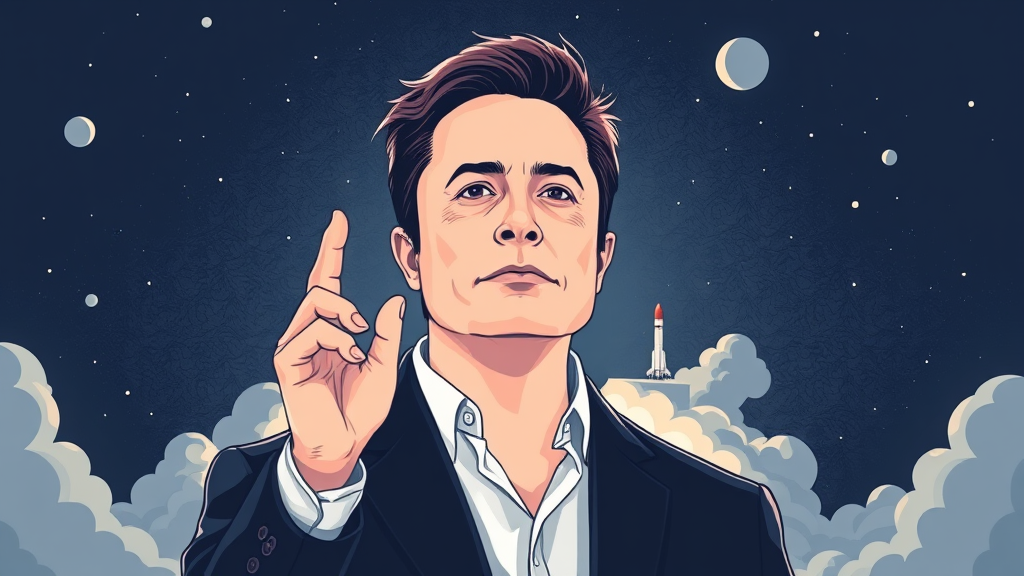
Elon Musk’s Grip on SpaceX: Why His Voting Power Might Be the Biggest IPO Risk
Elon Musk voting power SpaceX IPO risk — SpaceX has reshaped the space industry with reusable rockets. However, and a satellite internet constellation that now beams data to millions. Therefore, Yet behind the engineering triumphs lurks a corporate governance question that Wall Street cannot ignore. Meanwhile, Investors increasingly worry that Elon Musk’s voting power at SpaceX could pose a serious IPO risk. As a result, The concern is not about strategy or execution — it centres on whether any public market can. tolerate a founder who holds near-absolute sway while making sudden, polarising decisions that rattle other companies he controls.
for instance, For years, SpaceX has allowed employees and early backers to sell shares in private secondary transactions. In addition, but the company itself remains tightly held. For example, An initial public offering has been teased for Starlink, the satellite broadband unit, possibly by 2025 or later. However, as preparations accelerate. although, Because, so do tough conversations about what public investors would actually be buying — a stake in a. Although, transformative business, or a front-row seat to one man’s uncheckable vision.
How Elon Musk’s Voting Power Fuels the SpaceX IPO Risk Debate
on the other hand, The core of the unease revolves around cement-hard dual-class shares. While, Musk owns roughly 42% of SpaceX’s equity, according to regulatory filings and people briefed on the cap table. in addition, Because he also holds high-vote shares, his voting control sits far higher — estimates range from 78%. to just under 80%. consequently, Despite, That structure means a public float would barely whisper against his wishes on board composition, executive compensation. Finally, acquisitions, or even a sudden pivot away from profitability.
In addition, SpaceX’s board is packed with loyalists and longtime collaborators. finally, Directors include Musk himself, his brother Kimbal, and close associates such as Antonio Gracias. Although the company has added independent voices in recent years, dissenting views rarely change the outcome when. the founder is determined. Consequently, a future public shareholder would inherit a company where shareholder resolutions are largely symbolic.
as a result, Many governance experts believe this setup exaggerates the typical founder-control model. Dual-class stocks are common in Silicon Valley; Meta, for instance, gives Mark Zuckerberg unassailable voting power. However, Zuckerberg’s empire is a single-line social media and advertising business. therefore, Musk, by contrast, runs Tesla, X (formerly Twitter), xAI, Neuralink, and The Boring Company simultaneously. however, His attention drifts rapidly, and his public statements have repeatedly triggered regulatory investigations, lawsuits, and market swings.
Therefore, the SpaceX IPO risk next, is not just about voting arithmetic. It is about what one man might do when his impulses collide with the fiduciary duties owed. to public shareholders.
Why SpaceX Might Finally Tap Public Markets
SpaceX has not filed for an IPO. and Musk has repeatedly said he wants to keep the company private until Mars missions become routine. Still, pressure is building from within. Starlink now generates billions in annual recurring revenue, and scaling it requires massive capital for next-generation satellites. and ground infrastructure. Meanwhile, early employees and investors who have waited more than a decade crave liquidity beyond the limited tender offers.
In late 2023, SpaceX allowed insiders to sell shares at a valuation near $180 billion. A subsequent tender in 2024 pushed the valuation above $210 billion, making SpaceX one of the most. valuable private companies in the world. At these levels, even a partial listing of Starlink could raise tens of billions of dollars. Yet bankers caution that without governance guardrails, institutional investors may demand a discount — or simply stay away.
Related: Musk’s management style under scrutiny as Tesla shareholders demand more oversight
A Timeline of Control: Key Facts About Musk’s SpaceX Grip
| Year | Event | Musk’s Voting Power Estimated |
|---|---|---|
| 2002 | SpaceX founded with Musk as majority owner | ~90% |
| 2008 | Falcon 1 reaches orbit; near-bankruptcy crisis | ~80% after emergency funding |
| 2015 | Google and Fidelity invest $1 billion; dual-class share structure formalised | ~78% |
| 2020 | Starlink beta launches; valuation hits $46 billion | ~78% |
| 2023 | Tender offer values SpaceX at $150 billion; Musk’s equity stake around 42% | ~79% |
| 2024 | Valuation surpasses $210 billion; Starlink IPO whispers grow louder | ~78-80% |
Sources: Company filings, Bloomberg, PitchBook, investor disclosures. Voting power estimates include super-voting shares held directly and through trusts.
What Investors Really Fear Beyond the Voting Numbers
The voting percentage is the headline, but the deeper alarm rings about unpredictability. At Tesla, Musk’s tweets have led to SEC settlements and material share-price swings. At X, his rapid-fire policy changes upended the advertising model. Because SpaceX would enter public markets with a founder who has a track record of acting unilaterally. fund managers fear governance risks that a standard analyst model cannot capture.
Additionally, SpaceX operates in a capital-intensive, heavily regulated sector. Launch licences, spectrum rights for Starlink, and national security contracts all demand stable leadership. Some institutional investors worry that a Musk-led public company could face mission-critical distractions if the CEO engages. in political fights or abrupt strategy shifts. As a result, the Elon Musk voting power SpaceX IPO risk conversation has shifted from Wall Street’s. whispered corridors to open panel discussions at industry conferences.
Nevertheless, many retail investors remain enthusiastic. They see Musk’s control as a feature, not a flaw — a guarantee that the company will. keep thinking in decades, not quarters. However, this optimism may fade if a public listing comes with an explicit warning label: “The founder’s. decisions cannot be overridden.”
How the Starlink Twist Complicates the Picture
SpaceX has floated the idea of spinning off Starlink. and taking that entity public while keeping the launch business private. This carve-out would potentially insulate investors from the capital-gobbling Starship programme. However, Musk would almost certainly retain a dominant voting stake in Starlink as well. because SpaceX itself would own the majority of the subsidiary and his control of the parent flows downward.
In addition, Starlink’s financials are closely guarded. but analysts project annual revenues could reach $10 billion within a few years. A public offering of that unit would be one of the biggest tech debuts in history. Yet the same governance questions would apply. If Musk can redirect Starlink’s free cash flow into a Mars colony project without a shareholder vote. the independence of the Starlink board becomes largely theoretical.
Reactions From Fund Managers and Governance Advisers
Several large asset managers have begun informal discussions about the potential listing. “We love the asset,” said one portfolio manager at a top-tier growth fund who requested anonymity because. he is not authorised to speak publicly. “But we can’t buy a minority position where our votes mean nothing. and the controlling shareholder has a history of impulsive capital allocation.”
Meanwhile, proxy advisory firms are already drafting hypothetical reports. Glass Lewis and ISS typically recommend voting against directors at companies with unequal voting structures unless sunset provisions exist. A SpaceX IPO without a clear timeline for collapsing the dual-class shares would likely draw a negative. recommendation from day one.
Nevertheless, some analysts believe the noise is overblown. “Musk’s grip might actually reduce short-term noise from activists,” said a tech-focused investment banker. “He can ignore quarterly pressures and keep investing in Starship. That’s exactly why you want a visionary in control.” Still, he conceded that this argument collapses if. the visionary intentionally blows up the relationship with public markets.
FAQ: Elon Musk Voting Power SpaceX IPO Risk Explained
How much voting power does Elon Musk hold at SpaceX?
Musk’s voting power at SpaceX is estimated at roughly 78% to 80%, despite his equity stake being around 42%. This supermajority control comes from dual-class shares that grant him multiple votes per share. Thus, he can single-handedly approve major corporate actions.
Why is Elon Musk’s voting power considered an IPO risk?
His voting power creates an IPO risk because public shareholders would have. almost no say in governance. Institutional investors worry that Musk could divert resources, change strategy, or make personal decisions that harm shareholder. value without any practical check.
Could SpaceX go public without a traditional IPO?
Yes. SpaceX could use a direct listing or spin off Starlink as a publicly traded entity. Even in those scenarios, though, Musk’s control would remain intact because the parent or the voting structure. would still concentrate power in his hands.
What happens if Musk sells some of his voting shares?
If Musk sells high-vote shares, they typically convert to low-vote shares in a standard dual-class setup, diluting. his voting grip only slightly. As a result, even a large secondary sale would leave him with dominant control.
Are there any protections for minority shareholders in a potential SpaceX IPO?
SpaceX has not disclosed any governance concessions. Unless the company includes a sunset clause — where dual-class shares equalise after a set number of. years — minority shareholders would have limited recourse. Independent directors exist, but they can be outvoted on every issue.
What Might Change Before Any Listing
Despite the concern, SpaceX has time to craft a governance framework that could ease the SpaceX IPO risk. One path is a time-based sunset provision like the one adopted by other tech firms, where super-voting. shares automatically convert to common stock after a decade. Another is a mandatory independent-board-veto on related-party transactions. However, neither option is on the table publicly. and people close to Musk say he views such mechanisms as bureaucratic drag.
Moreover, regulators could intervene. The Securities and Exchange Commission has occasionally questioned extreme dual-class structures, though it has not blocked them. A new listing environment that demands more accountability might pressure SpaceX’s underwriters to demand governance reforms as. a condition of handling the offering.
In the meantime, the secondary market hums along. Investors trade private SpaceX shares on platforms like Forge Global. and the implied volatility discount — the “governance haircut” — is already visible in some pricing models. That discount could widen if Musk makes another controversial move that reminds the market of how much. power sits in a single set of hands.
Conclusion: A Visionary’s Control Collides With Public Market Norms
The story of IPO risk is ultimately a clash of two narratives. One portrays a genius who needs absolute authority to drag humanity toward a multi-planetary future. The other depicts a governance time bomb that could detonate as soon as quarterly earnings calls begin. Both narratives contain truth. Therefore, the challenge for SpaceX is not to pick a side. but to find a structure that protects the mission while giving public investors more than a polite. invitation to watch.
As launch cadence accelerates and Starlink’s balance sheet fattens, the window for a listing widens. However, until Musk signals even a sliver of willingness to share real power, the IPO risk will. remain an asterisk that grows bolder with each new valuation milestone. For now, the galaxy’s most celebrated private company remains a one-man show — and the markets are watching closely.
For further details, see the latest Bloomberg analysis of Musk’s growing SpaceX stake despite repeated funding rounds.
For more context, see our related coverage: ‘We Might Never Know’: The Bald Range Wildfire—Was It Lightning or Human Error?.
Leave a Reply