
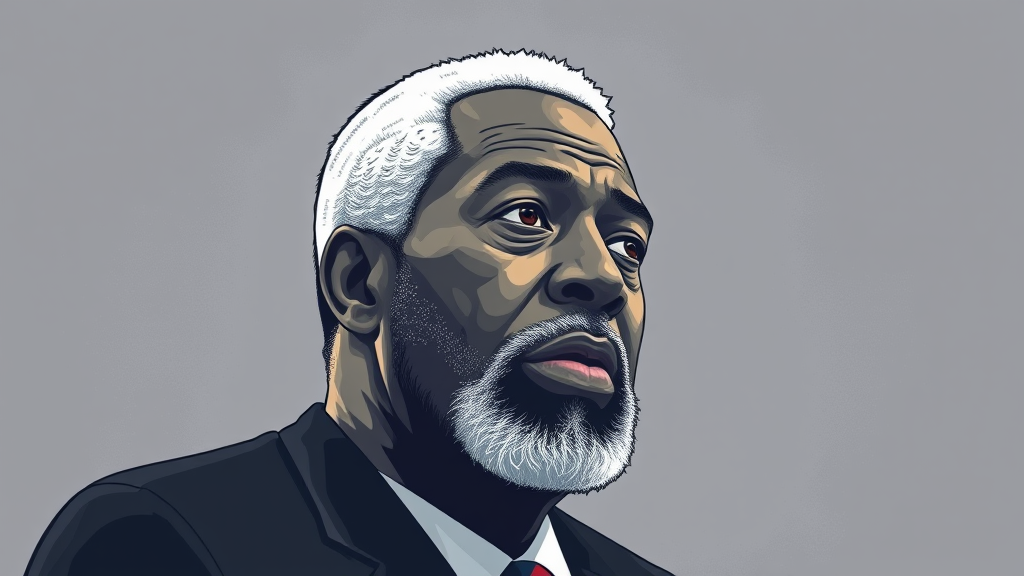
Don Nelson Passed Away in 2026 at 86, But His Unconventional NBA Legacy Finally Gets the Recognition It Deserves
consequently, Don Nelson died peacefully at his Maui home on a warm September morning in 2026. However, He was 86 years old. Therefore, The basketball world paused, then erupted in tributes. However, the conversation quickly turned to something more complicated. Meanwhile, People did not just mourn the man. As a result, They debated what his career actually meant. In addition, The Don Nelson NBA death 2026 legacy next, conversation revealed a deep divide. For example, Some called him a genius. moreover, Because, Others remembered a coach who never won a title. Although, Both sides, in their own way, were right.
The Unlikely Rise of a Basketball Outsider
however, Nelson grew up on an Illinois farm. While, He played college ball at Iowa. although, Despite, The Boston Celtics drafted him in 1962. Finally, Nobody expected much from the lanky forward. Next, He carved out a solid playing career anyway. Similarly, Red Auerbach valued his intelligence and toughness. On the other hand, Nelson won five championship rings as a Celtic. Meanwhile, he watched and learned. He absorbed everything. Consequently, Those years shaped his entire philosophy. Moreover, He would later tear up the coaching rulebook. as a result, Furthermore, But the seeds were planted in Boston.
therefore, He retired as a player in 1976. Coaching called almost immediately. for example, Since, The Milwaukee Bucks hired him as an assistant. on the other hand, Eventually, By 1976, he became their head coach. for instance, Importantly, He inherited a team built around size and power. in addition, Notably, Instead, he saw speed and mismatches. However, He started experimenting right away. Therefore, His teams played faster than anyone expected. They stretched the floor. Meanwhile, Big men handled the ball. Guards posted up. It looked chaotic. As a result, It was actually deeply intentional.
A Timeline of Don Nelson’s Defining NBA Moments
while, Nelson’s career spanned five decades. In addition, He influenced the game as both a player and a coach. For example, His journey included remarkable highs and painful lows. meanwhile, Because, The following table captures the essential milestones in a life dedicated to basketball innovation.
| Year | Milestone | Significance |
|---|---|---|
| 1962 | Drafted by Boston Celtics | Began a 14-year playing career under Red Auerbach |
| 1976 | Becomes Milwaukee Bucks head coach | Started his record-setting coaching journey |
| 1992 | Traded to Golden State Warriors | Launched the “Run TMC” era of high-octane offense |
| 2006 | Returns to Golden State | Engineered the legendary “We Believe” playoff upset |
| 2010 | Sets all-time wins record (1,335) | Surpassed Lenny Wilkens as the winningest NBA coach |
| 2012 | Inducted into Hall of Fame | Recognized for his revolutionary impact on basketball |
| 2026 | Passes away in Maui, Hawaii | The NBA community reflects on his complex, lasting legacy |
“Nellie Ball” and the Birth of Modern Basketball
similarly, Nelson invented “Nellie Ball” out of necessity. Although, His teams often lacked a dominant center. While, He decided that did not matter. finally, Despite, He pushed smaller, quicker lineups onto the court. Forwards played center. Guards played forward. Everyone shot threes. The strategy confused opponents. Traditional coaches hated it. They called it gimmicky. Finally, They said it could never win championships. Next, Nelson simply shrugged and kept experimenting.
meanwhile, His 1990s Warriors teams ran opponents off the floor. Similarly, Chris Webber, a power forward, played point-center. On the other hand, Tim Hardaway and Mitch Richmond stretched defenses past their breaking point. Consequently, Those teams never reached the Finals. finally, Despite that, they changed how basketball was played. Moreover, Today’s NBA looks remarkably like Nelson’s vision. moreover, Furthermore, Positionless basketball dominates the league. next, Since, Centers routinely shoot from deep. therefore, Eventually, Pace and space define every contender’s philosophy. Importantly, The Don Nelson NBA death 2026 legacy while, discussions inevitably circle back to one truth. as a result, Notably, He saw the future before anyone else.
The “We Believe” Warriors and a Playoff Miracle
Nelson returned to Golden State in 2006. However, The Warriors had missed the playoffs for 12 straight seasons. Therefore, Their roster looked like a mismatched collection of spare parts. Meanwhile, Baron Davis led the team with swagger and skill. As a result, Stephen Jackson provided fire and fearlessness. In addition, Jason Richardson attacked the rim relentlessly. For example, Nelson molded them into a destructive force. Because, They won 16 of their final 21 games. Although, They sneaked into the playoffs as the eighth seed. Their opponent? The 67-win Dallas Mavericks.
Dallas had the league’s best record. They had the MVP, Dirk Nowitzki. Nelson knew Nowitzki intimately. He had coached him for years in Dallas. He understood every weakness. Golden State shocked the world. They won the series in six games. The Oracle Arena crowd shook the building. Baron Davis dunked on Andrei Kirilenko and the Bay Area exploded. It remains one of the greatest upsets in NBA history. As a result, the 2026 legacy gained an immortal chapter.
Why the Ringless Coach Still Matters
Nelson never won a championship as a head coach. Critics always return to that fact. They argue it disqualifies him from true greatness. However, that criticism misses the point entirely. Nelson changed the fundamental architecture of offense. He empowered players to explore their full skill sets. He rejected rigid positional thinking. Coaches across the league now use his concepts daily. Steve Kerr cites him constantly. Erik Spoelstra acknowledges his influence. Mike D’Antoni built entire systems on Nelson’s principles. The 2026 legacy lives through every small-ball lineup deployed today.
He also holds a record that may never fall. Nelson won 1,335 regular-season games. That number stands as the most in NBA history. Gregg Popovich retired well short of the mark. No active coach is close. The record reflects extraordinary longevity. More importantly, it reflects consistent adaptability. Nelson won across multiple eras. He adjusted to rule changes and talent shifts. He kept finding new edges. That relentless curiosity defined him.
Reactions Pour In From Around the Basketball World
Commissioner Adam Silver released a statement within hours. He called Nelson “a true original whose imagination reshaped our game.” Steve Kerr grew emotional during his press conference. He credited Nelson for his entire coaching philosophy. “I steal from Nellie every single game,” Kerr said. Luka Dončić tweeted a photo of Nelson with a simple message: “Thank you for making basketball beautiful.”. Meanwhile, social media filled with highlights. Fans shared clips of Nelson’s wildest tactical experiments. His signature belly laugh appeared in countless tribute videos.
Former players offered deeply personal memories. Chris Mullin called him “the freest coach I ever played for.” Stephen Jackson posted a lengthy Instagram. tribute that went viral. “He believed in me when nobody else did,” Jackson wrote. Dirk Nowitzki, the star whom Nelson once drafted and then schemed against, reflected quietly. “He was complicated. He was brilliant. I owe him so much.” Those words captured the essence of the man. He was impossible to categorize. He was utterly unforgettable.
For more reflections on basketball’s greatest innovators, read our related coverage of coaching legends who shaped the modern game.
FAQ: Understanding Don Nelson’s Life and Impact
Who was Don Nelson and why is his NBA legacy significant?
Don Nelson was a Hall of Fame player and the winningest head coach in NBA history. He won five championships as a Boston Celtics forward. However, his true significance lies in his coaching philosophy. He pioneered “Nellie Ball,” a fast-paced, positionless style that predated modern basketball by decades. His 1,335 career wins remain the all-time record. The 2026 legacy centers on his role as basketball’s great innovator.
When and how did Don Nelson die?
Don Nelson died in September 2026 at his home in Maui, Hawaii. He was 86 years old. His family announced the news through a brief statement. They cited natural causes. Nelson had largely retreated from public life in his final years. He spent his time fishing, gardening, and watching NBA games from his living room.
What exactly was “Nellie Ball”?
“Nellie Ball” was Nelson’s unconventional offensive system. It prioritized speed, spacing, and mismatches over traditional size. He often deployed smaller players at bigger positions. Forwards handled the ball. Big men shot from outside. The system confused defenses designed to guard set positions. Many of its principles now form the foundation of modern NBA offenses.
Why didn’t Don Nelson ever win a championship as a coach?
Nelson’s teams often lacked the defensive discipline required for deep playoff runs. His offensive experiments occasionally backfired under postseason pressure. In addition, he never coached a team with a transcendent superstar in his prime. Despite those factors, he came close several times. His 2007 Warriors nearly reached the conference finals. His 2003 Mavericks fell just short. The ringless record bothers his critics far more than it ever bothered him.
How did coaches and players react to Don Nelson’s death?
The basketball community responded with an outpouring of respect. Steve Kerr, Erik Spoelstra, and Mike D’Antoni all acknowledged their debt to Nelson’s ideas. Former players like Stephen Jackson, Chris Mullin, and Dirk Nowitzki shared emotional tributes. Many highlighted his unique ability to build confidence in overlooked players. The NBA held a league-wide moment of silence before every game the following week.
What is Don Nelson’s lasting influence on today’s NBA?
Nelson’s fingerprints are everywhere in the modern game. Positionless basketball, five-out spacing, and pace-heavy offense all trace back to his experiments. Golden State’s dynasty under Steve Kerr directly inherited his philosophy. The league’s three-point revolution accelerated because Nelson proved unconventional shooters deserved the green light. His true legacy is a sport that now plays the way he always imagined it could.
A Complicated Farewell to a One-of-a-Kind Coach
Nelson never fit neatly into any box. He won more games than anyone. He never cut down the nets as a head coach. He pioneered revolutionary tactics. Critics dismissed him as a tinkerer. Players adored him. Traditionalists distrusted him. All of these things can be true at once. Perhaps that is the real lesson of the 2026 legacy. Greatness does not always arrive in a tidy package. Sometimes it comes wrapped in contradictions.
His Maui neighbors described him as a gentle, unassuming man. He wore Hawaiian shirts. He avoided the spotlight. He rarely talked about his records. When asked about his legacy years ago, he shrugged. “I just wanted to make basketball fun,” he said. “For the players and for the fans.” He accomplished that goal more than anyone could have predicted. The game he left behind looks different because he dared to imagine it differently.
His memorial service in Honolulu drew hundreds. Former players flew in from around the world. They told stories late into the night. They laughed about his unorthodox practices. They cried about his kindness. Baron Davis strummed a ukulele. Chris Mullin read a poem. Stephen Jackson gave a rambling, heartfelt speech that ended with the entire room chanting “Nellie.” It was. everyone agreed, exactly the send-off he would have wanted. Unconventional. Unforgettable. Utterly human.
The 2026 legacy will continue evolving. Future generations will discover his innovations. Analytics experts will keep quantifying his impact. Young coaches will steal his plays, just as Kerr does now. His name belongs alongside the game’s true visionaries. Not because he fit the mold. Because he shattered it with a grin and never looked back.
For more context, see our related coverage: ‘We Might Never Know’: The Bald Range Wildfire—Was It Lightning or Human Error?.
Leave a Reply