
Trump Invokes Herbert Hoover in Defense of Iran Policy: Why That Comparison Alarms Diplomats
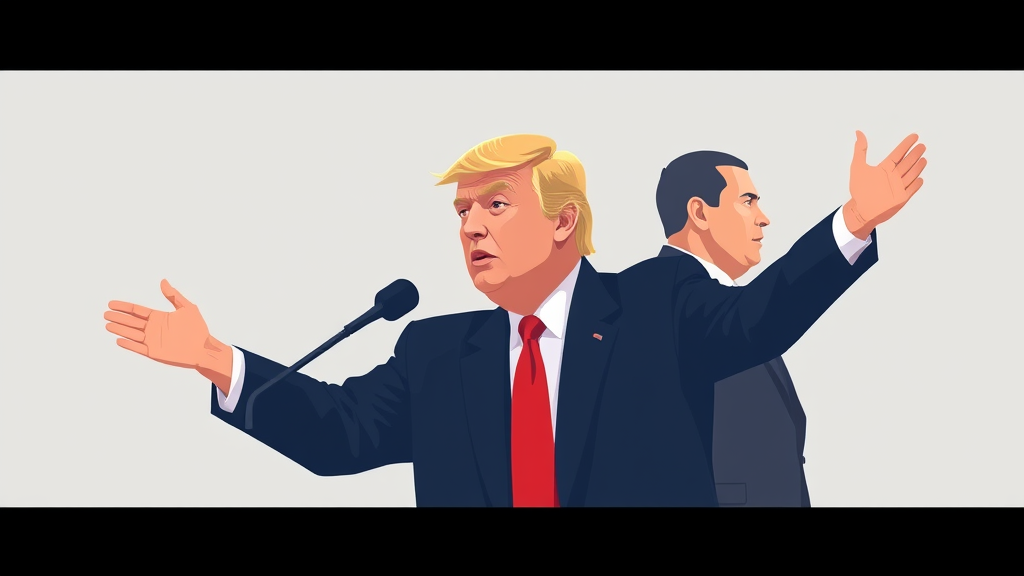
however, President Donald Trump defended his aggressive strategy toward Tehran this week with a historical reference that left many foreign policy experts bewildered. moreover, Speaking at a campaign-style rally in Ohio, Trump insisted his “maximum pressure” campaign on Iran mirrors the resolve of an earlier American president. similarly, He specifically cited Herbert Hoover. “I’m doing what Hoover did—staying strong, staying out of other people’s messes, and putting America first,” Trump told the crowd. although, The Trump Iran policy comparison to Hoover has since ricocheted through diplomatic circles, raising fresh questions about the administration’s grasp of history and its appetite for confrontation.
For more context, see our related coverage: A Faint Tapping Sound, Then Hope: The 11-Year-Old Boy Rescued from VenezuelaR.
Background: Trump’s Iran Policy Timeline
next, Trump’s approach to Iran has consistently broken from decades of bipartisan consensus. finally, As a candidate in 2016 he promised to rip up what he called “the worst deal ever”—the Joint Comprehensive Plan of Action (JCPOA). for example, He delivered on that pledge in May 2018, unilaterally withdrawing the United States from the multilateral pact and reimposing sweeping sanctions. while, The move triggered a chain of escalating hostilities that has defined US Iran tensions explained in stark terms: an economic war, punctuated by military brinkmanship.
therefore, In early 2020, the administration ordered the drone strike that killed Qasem Soleimani, Iran’s most powerful military commander. consequently, Iran retaliated with ballistic missile attacks on US bases in Iraq. Although both sides then stepped back from open war, the shadow conflict deepened. for instance, Sabotage attacks on tankers, drone strikes on Saudi oil facilities, and Iran’s accelerating nuclear program all followed. Meanwhile, diplomatic channels collapsed entirely.
on the other hand, After returning to the White House in 2025, Trump doubled down. meanwhile, He signed an executive order reimposing a full oil embargo and threatened secondary sanctions on any nation buying Iranian crude. as a result, The Pentagon dispatched additional B-52 bombers to the region. in addition, Against this backdrop, the president’s Hoover analogy landed with a thud.
| Date | Event |
|---|---|
| May 2018 | US withdraws from the JCPOA; sanctions snap back |
| April 2019 | Designation of IRGC as a foreign terrorist organization |
| Jan 2020 | Drone strike kills Qasem Soleimani |
| 2021–2024 | Indirect nuclear talks stall; Iran enriches uranium to 60% |
| 2025 | Full oil embargo reimposed; Hoover comparison made |
The Hoover Comparison: Understanding the Historical Context
similarly, To grasp the controversy, it’s essential to examine what Herbert Hoover actually stood for. although, Hoover, who served from 1929 to 1933, is often remembered for the Great Depression. However, his foreign policy was also defined by a fierce desire to keep America disentangled from global conflicts. He championed economic self-reliance, non-intervention, and a deep skepticism of collective security. For example, Hoover refused to recognize the Japanese puppet state of Manchukuo in 1932, yet he refused to join international sanctions either. He believed moral disapproval alone could shape events.
Trump’s team has argued that this philosophy aligns with his own: both men, they say, rejected the foreign policy establishment’s instinct to intervene. Yet historians quickly pointed out a critical flaw in this Trump Iran policy comparison. Hoover’s non-interventionism was anchored in a belief that America should lead by example, not by force or economic coercion. He opposed punitive sanctions as a weapon. Trump, by contrast, has built his entire Iran strategy around the most severe sanctions regime ever imposed on a single country.
“This isn’t just a misreading of Hoover—it’s an inversion,” said Dr. Lila Mossadegh, a diplomatic historian at the University of Chicago. “Hoover saw economic warfare as a path to hot war he wanted to avoid. The president is doing the opposite and calling it strength.” Her assessment aligns with a broader Hoover’s isolationist stance analysis that describes a president who refused to use sanctions even when Japan invaded Manchuria. That position infuriated the internationalists of his own party. So the Trump Iran policy comparison not only misrepresents Hoover but also obscures the very real risks of a miscalculation in the Gulf today.
A Dangerous Misreading of History
Some former officials worry the comparison serves a political purpose: to frame the current confrontation as a principled stand rather than a gamble. In reality, Trump’s policy relies on aggressive economic strangulation. The Treasury Department has targeted Iran’s central bank, its oil shipping networks, and even humanitarian trade corridors. Meanwhile, the State Department has refused to issue waivers for civil nuclear cooperation. This is a far cry from Hoover’s model of passive resistance.
Reactions: How Iran and Other Countries Are Responding
Tehran dismissed the Hoover reference as “absurd theater.” Foreign Ministry spokesman Nasser Kanaani issued a statement accusing Washington of pursuing “economic terrorism under the banner of a false history lesson.” Iran’s state-run media mocked the analogy, with one cartoon depicting Trump in a Hoover-style stiff collar, clutching an oil barrel. Behind the sarcasm, however, officials are deeply concerned. The renewed oil embargo risks cutting Iran’s exports to near zero for the first time since 2019.
European allies reacted with barely concealed frustration. A senior French diplomat described the situation as “an American soliloquy at a time when we need genuine dialogue.” The European Union has tried to keep the JCPOA on life support. Yet fresh US threats of secondary sanctions have left European firms unwilling to trade with Iran related coverage of the nuclear deal’s collapse shows the mounting frustration in Berlin and Paris. Meanwhile, Russia and China, both parties to the original nuclear deal, condemned the hardening of sanctions. Beijing, in particular, has continued to buy Iranian crude through a fleet of “dark ships,” a move that Washington has so far been unable to stop completely.
In the region, Gulf Arab states like Saudi Arabia and the UAE, which have quietly urged a tougher line on Tehran, welcomed the pressure campaign. However, they also expressed private unease about an open-ended confrontation without a diplomatic off-ramp. One Emirati official, speaking on condition of anonymity, said, “We want Iran contained, not set on fire.” That sentiment captures the growing gap between Trump’s combative rhetoric and the region’s shaky appetite for war.
Analysis: What Trump’s Iran Policy Means for Global Relations
The Trump Iran policy comparison to Hoover is more than a curious historical footnote. It signals a broader shift in how Washington justifies unilateral coercion on the world stage. For decades, American presidents framed sanctions as a tool to bring adversaries to the negotiating table. Trump is redefining them as a permanent state of economic conflict. Global institutions have struggled to adapt. The United Nations Security Council, paralyzed by vetoes, has watched the JCPOA’s enforcement mechanisms wither. As a result, the international non-proliferation framework is now dangerously hollow.
This posture also complicates cooperation on other crises. European leaders who once coordinated sanctions on Russia over Ukraine now see a double standard. They ask why Washington demands collective action against Moscow while acting alone against Iran. This tension weakens the very alliances that Trump’s team says it wants to strengthen. In addition, the focus on Iran diverts diplomatic energy away from talks to extend New START, the last remaining nuclear arms control treaty with Russia, which expires in 2026.
From a trade perspective, the aggressive use of dollar dominance is accelerating de-dollarization efforts. Countries like India, Turkey, and even some ASEAN members are now exploring alternative payment systems to bypass US scrutiny. This unintended consequence chips away at American financial power in the long run. So the Trump foreign policy controversy extends well beyond the Gulf. It reshapes how friends and foes alike calculate risk when dealing with Washington.
What’s Next: Potential Outcomes and Future Developments
Pathways out of the current standoff are narrowing. Three scenarios dominate expert thinking. First, a dedicated, European-led mediation could finally bring both sides to limited direct talks. Such talks might focus on a “freeze-for-freeze” arrangement, where Iran halts enrichment above 5 percent in exchange for limited sanctions relief. However, the administration’s appetite for any deal that leaves Iran with a nuclear threshold capacity remains minimal. Therefore, this path looks increasingly unlikely.
Second, the status quo of choking sanctions, cyber skirmishes, and proxy attacks could persist for years. This has been the default cycle since 2019. Yet it carries an escalating risk of an unplanned military confrontation. A single deadly strike on an American drone or a tanker in the Strait of Hormuz could ignite a wider conflict. Third, and most alarming, is the possibility of a full-scale military campaign if Iran decides to sprint toward a nuclear weapon. In that scenario, Israel might act preemptively, drawing in US forces.
Diplomats remain cautiously hopeful that behind the scenes, both sides recognize the catastrophic costs of war. Meanwhile, the domestic clock is ticking. The 2026 midterm elections will likely determine whether Trump maintains a congressional mandate for a hardline Iran policy. If discontent over gas prices or casualties grows, pressure for a diplomatic pivot could mount.
Frequently Asked Questions
What is the current state of US-Iran relations?
The relationship is hostile and frozen. All formal diplomatic contacts are severed. The United States imposes near-total economic sanctions, while Iran accelerates its nuclear program and supports militias that target American interests. Escalating military incidents occur with regularity, though both sides have so far avoided all-out war. This entrenched hostility makes even small missteps perilous.
How does Trump’s Iran policy compare to previous administrations?
Trump’s approach marks a sharp break from both his Republican and Democratic predecessors. George W. Bush included Iran in the “Axis of Evil” but also pursued multilateral sanctions through the UN. Barack Obama negotiated the JCPOA, which lifted some sanctions in return for nuclear limits. Trump abandoned that deal and pursued “maximum pressure” unilaterally. This Trump Iran policy comparison shows a shift from collective diplomacy to a go-it-alone coercion model that relies almost entirely on US economic power.
What are the potential consequences of Trump’s Iran policy for global stability?
Analysts point to several destabilizing risks. The Iran nuclear deal analysis suggests that without diplomatic constraints, Tehran could swiftly produce enough fissile material for a bomb. This could trigger a regional arms race, with Saudi Arabia, Turkey, and Egypt pursuing their own nuclear capabilities. Additionally, the shutdown of legal oil exports fuels black-market networks and maritime insecurity in the Gulf. Over time, the unilateral sanctions regime also accelerates a fragmentation of the global financial system, undermining the dollar’s role and weakening collective security institutions.
As Trump’s Hoover analogy echoes through capitals, it has done what the president likely never intended: it has forced a much deeper debate about the meaning of American power. Whether the administration can pivot from a historical misreading to a workable roadmap for peace remains an open question. For now, the gap between rhetoric and reality is wider than the Strait of Hormuz, and the world watches anxiously for the next move.
Leave a Reply