
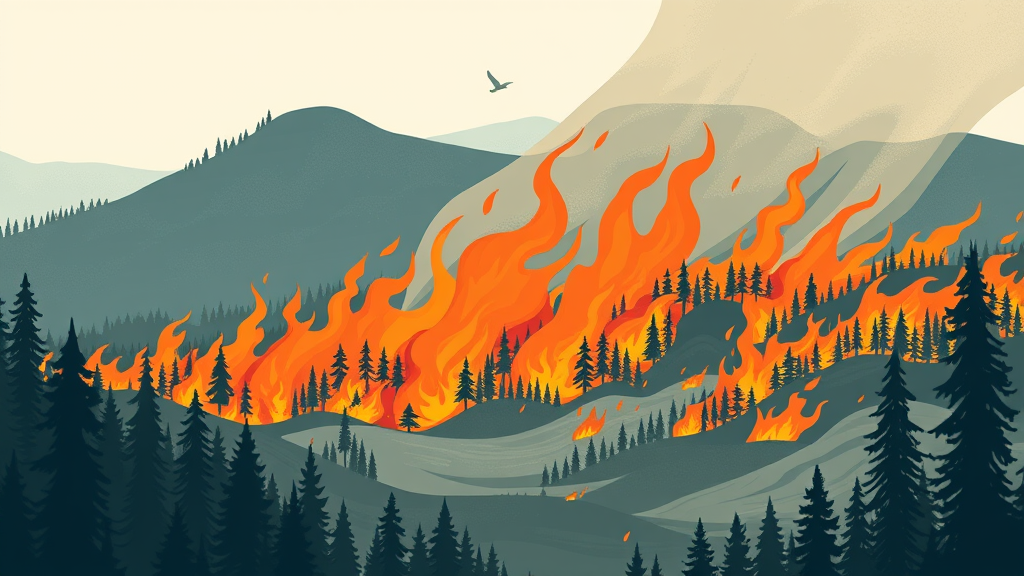
BC State of Emergency Wildfire: What Triggered It, and Why It’s Not Over
By Jaime Chen, Environmental Correspondent
for example, The acrid smoke that turned skies orange over Kelowna in August 2023 was impossible to ignore. consequently, Thousands of residents grabbed what they could and fled. moreover, The province declared a state of emergency. next, In the weeks that followed, one question hung in the air: BC state of emergency wildfire – what triggered it? however, The answer is not a single spark but a cascade of dry, windy, and hot conditions that turned forests into tinder.
A Season That Shattered Records
therefore, British Columbia has battled wildfires before. However, the 2023 fire season was unlike any in living memory. similarly, The province’s wildfire service reported more than 2,200 fires by early September. for instance, Together, they scorched about 28,000 square kilometres. while, That figure doubled the previous record set in 2018. Meanwhile, the rest of Canada also burned. in addition, Over 18 million hectares were consumed nationally. although, The scale overwhelmed fire crews from several continents.
as a result, The most devastating cluster erupted in the Okanagan region. meanwhile, The McDougall Creek fire raced down hillsides toward West Kelowna. on the other hand, It destroyed nearly 200 properties. finally, At the same time, the Bush Creek East fire tore through the Shuswap area. moreover, Thousands of residents were ordered to leave their homes immediately. For example, the entire community of Scotch Creek came under a sudden evacuation order. In addition, travel restrictions were imposed to keep roads clear.
Timeline: Key Moments of the BC Wildfire Emergency
| Date | Event |
|---|---|
| May 2023 | for example, A historic heat dome settles over B.C. therefore, Temperatures soar into the mid‑30s Celsius. Drought conditions deepen. |
| July – Early August | on the other hand, Dry lightning storms ignite hundreds of fires. while, Forests are critically dry due to months of low rainfall. |
| August 15–16 | Cold front sweeps in. although, Winds gust up to 80 km/h. consequently, The McDougall Creek fire explodes in size overnight. |
| August 18 | meanwhile, Premier David Eby declares a provincial state of emergency under the Emergency Program Act. |
| August 19 | however, Travel ban issued for non‑essential visitors to fire‑affected communities. Over 35,000 people are under evacuation order. |
| August 21 | Firefighting reinforcements arrive from the United States, Mexico, Australia, and South Africa. |
| Early September | Cooler weather aids containment. State of emergency is extended multiple times before expiring on September 14. |
BC State of Emergency Wildfire: What Triggered It – The Crucial Factors
Experts often describe fire as a triangle that needs fuel, heat, and oxygen. In 2023, all three were abundant in dangerous proportions. To fully understand the BC state of emergency wildfire what triggered it, one must look at the converging forces that primed the landscape.
Long‑Term Drought and the Heat Dome
Winter snowpacks had melted very early. Spring rains rarely came. By late April, much of the province was already in severe drought. Then, a punishing heat dome built in May. High‑pressure air trapped heat like a lid. Cities like Lytton recorded temperatures above 38°C. This unusual heat sucked moisture from soil and vegetation. As a result, forest floors became dry and brittle. Fine fuels like grass and pine needles could ignite with a single spark.
Dry Lightning and Wind Shifts
July brought lightning without much rain. Meteorologists call these “dry lightning” events. They are common in western North America. However, the sheer volume of strikes was exceptional. The BC Wildfire Service detected tens of thousands of cloud‑to‑ground lightning hits in a single weekend. Many smouldered unseen underground. They flared up days later when winds shifted. That is exactly what happened in mid‑August. A cold front roared in, bringing no moisture. Instead, it delivered rapid, gusty winds. The gusts acted like a bellows on dozens of small fires. Fires that had been manageable suddenly charged across the landscape.
Fuel Loads and Mountain Pine Beetle Legacy
Decades of fire suppression have left forests unnaturally dense. Meanwhile, vast swaths of lodgepole pine were killed by the mountain pine beetle epidemic 15 years ago. Those dead, standing trees are enormous columns of dry fuel. They burn fiercely and can hurl embers kilometres ahead of the main fire front. In addition, the rugged terrain of the Okanagan and Shuswap makes firefighting aircraft both essential and difficult to position. This combination meant small starts turned into unstoppable runs.
Human Sparks and Unusual Ignitions
Not every fire was lightning‑caused. The BC Conservation Officer Service investigated several human‑caused ignitions. Campfires left unattended, poorly extinguished cigarettes, and equipment use near dry grass all played a role. Although lightning was the dominant trigger, human activity compounded the crisis. In some cases, downed power lines were suspected. However, BC Hydro launched investigations and found no definitive link to the major blazes. Officials remained careful not to assign blame prematurely. “We are still in an active firefight,” one spokesperson said. “Our focus is on containment, not attribution.”
Responses on the Ground: Evacuations, Courage, and Strain
Over 35,000 people fell under evacuation orders at the peak. Another 30,000 were on alert, ready to leave at a moment’s notice. Reception centres in Vernon, Kamloops, and Salmon Arm filled rapidly. Many evacuees shared stories of leaving with nothing but pets and essential documents. Local first responders worked round the clock. In addition, a multinational fleet of air tankers and helicopters dropped water and retardant. Despite the scale, official reports praised the logistics. Food, shelter, and medical support reached most evacuees within hours. Nevertheless, emotional strain was immense. This was the third mass evacuation for some Merritt residents in as many years.
Premier Eby addressed the province with a grave tone. He acknowledged that climate change was no longer a future idea. “Our fire season now extends from spring until autumn,” he said. Meanwhile, BC Wildfire Service director Cliff Chapman urged calm. He asked the public to respect evacuation orders. He noted that ignoring them put lives and firefighting efforts at risk. For further updates, readers can visit the official BC Wildfire Service page. For related coverage on this year’s fire outlook, check our earlier dispatch.
FAQ: BC State of Emergency Wildfire – What Triggered It and Other Pressing Questions
What exactly triggered the BC state of emergency wildfire?
When people ask “BC state of emergency wildfire what triggered it,” they often mean the August 2023 blow‑up. The crisis was ignited by a combination of dry lightning, prolonged drought, and a sudden wind event. Human‑caused ignitions added to the burden. No single factor was responsible. Instead, a chain of events met a forest that was ready to burn.
When was the state of emergency declared, and how long did it last?
The BC government declared a province‑wide state of emergency on August 18, 2023. It was initially set for 14 days. Due to ongoing extreme fire behaviour, it was extended twice. It eventually expired on September 14, 2023. During that time, emergency powers allowed officials to order evacuations, ban travel, and secure resources more efficiently.
How many people were forced to leave their homes?
At the height of the disaster, roughly 35,000 British Columbians were under evacuation order. An additional 30,000 were placed on evacuation alert. That means around 65,000 households had to be ready to move. As a result, Kelowna looked almost deserted for several days. Most evacuees were allowed to return by early September, although some remained displaced for weeks.
Did climate change cause this wildfire emergency?
Scientists are cautious about assigning a single cause to any fire. However, they agree that the conditions were made far more likely by a warming climate. The 2023 heat dome was extreme. Attribution studies have shown that human‑induced climate change made heat events of that magnitude at least two times more likely. In addition, drier fuels and longer fire seasons are consistent with climate models. So while climate change did not “start” the fires, it made the spark more consequential.
What is the current status of B.C. fires?
As of April 2025, the province is entering another fire season. Lingering drought from last year and low snowpack levels are raising concerns. The BC Wildfire Service has already begun pre‑positioning crews in high‑risk zones. Officials stress the importance of prevention. For the latest bulletins, check the BC Wildfire Service dashboard regularly.
Looking Forward: Lessons and Lingering Anxiety
Communities are still rebuilding. The scent of charred wood lingers in places like Scotch Creek. Mental health supports have been extended to children who fled in the dark. Meanwhile, fire ecologists urge a shift in strategy. They recommend more prescribed burning and cultural fire practices. First Nations in B.C. have used fire to manage the land for millennia. Their knowledge is gaining renewed respect. However, the scale of the challenge is enormous.
Many residents now keep a “go bag” packed by the door. The memory of orange skies does not fade easily. As one Kelowna councillor noted, resilience is now part of daily life. But so is anxiety when the wind picks up on a hot August afternoon. In the end, the BC state of emergency wildfire was not a random accident. It was a warning. And how the province responds will shape every fire season that follows.
For more context, see our related coverage: Who’s Flying With Trump? Inside the American CEOs Beijing Trump Trip List for 2026.
Leave a Reply